Why we monitor platypus populations

Now that you have completed the first half of the course I’m sure you can work out why we monitor platypus populations. Unfortunately they are under threat from every angle and it is vital that populations are observed to understand whether they are in danger of becoming extinct.
In Queensland the species is listed as ‘Special Least Concern’, which means they are considered to not be challenged or in decline. This is very concerning to Watergum and other organisations that monitor platypus as we are well aware that they are under threat and are possible in significant decline nationally. Little to no research has been carried out by governing bodies to support this listing and this is why the work conducted by Watergum’s PlatypusWatch volunteers is so important. It is small groups like us who are out there collecting population data on platypus populations and helping to piece together the situation of platypus and raise awareness of their predicament.
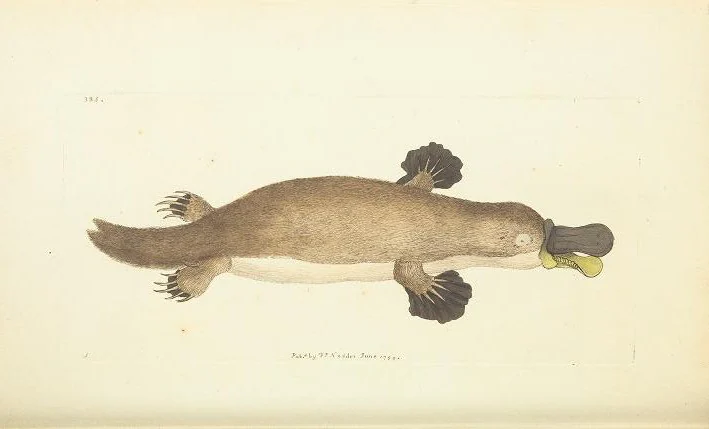
So how did this happen? Why is it that platypus populations are declining and no one seems to be noticing? In the 18th and 19th centuries platypus were common and as they are highly resilient animals no one was really that concerned about them. Since platypus are nocturnal, not seeing them very often is not that unusual, so nobody worried too much about them. Then, at some point in the 1980s and 1990s, the alarm started to be raised that platypus populations might be in decline, but as there were no records or understanding of how many platypus there should be, it was difficult to confirm this. This is an ecological phenomenon known as a ‘shifting baseline’. As we don’t know how many there were in the first place, it is difficult to prove that their numbers have decreased. However, it seemed highly likely that their numbers would have decreased due to the impacts of European colonisation; most notably large-scale land clearing, declining water quality, urbanisation, invasive predators and the fur industry (platypus pelts were once highly sought after, with one fur retailer in Sydney recording over 29,000 sales in one calendar year). Long-term monitoring programs were established and as the data trickled in and was analysed, it became immediately clear that platypus populations were in trouble. Since then, platypus monitoring has occurred and awareness of their plight has been raised, but it’s still not enough!

The IUCN Red listing for platypus was elevated to ‘near threatened’ in 2016. The International Union for Conservation of Nature Red List of Threatened Species, founded in 1964, is the world’s most comprehensive inventory of the global conservation status of biological species. It uses a set of criteria to evaluate the extinction risk of thousands of species and subspecies. But despite concern for platypus being recognised internationally, the federal government of Australia has not yet recognised the severity of the situation.
To demonstrate the difficulties presented by a shifting baseline and how it can impact species listings, consider theis;
In 2016 (prior to the significant bushfires) experts estimated that there were 329,000 koalas left in the wild.
- Victoria – koalas were listed as ‘threatened’
- New South Wales – they were considered to be ‘vulnerable to extinction’
- Queensland – they were considered to be ‘vulnerable’.
In that same year, experts estimated that there were between 30,000 and 300,000 platypus left in the wild, less, and potentially significantly less, than koalas, yet they only received the conservation statuses of ;
- Victoria – ‘near threatened’
- New South Wales – ‘protected’
- Queensland – ‘special least concern’ in QLD.
The inconsistency is clear and it is imperative that research continues so that platypus can be properly protected.