How to identify a platypus
There are lots of creatures using our waterways and if you don’t know what you’re looking for it can be difficult to make a positive identification. It is important that our surveys are reliable and that mistaken identity doesn’t impact the data we collect. For that reason, new volunteers must learn how to determine whether specific splashes and trails in the water indicate the presence of a platypus or something else. A platypus sighting should only be recorded when you are one hundred percent sure that you have seen one. Here are some tips on specific things to look out for and how to differentiate platypus from other aquatic animals.
Splashes and Ripples
When platypus dive down to the bottom of the river bed they leave a circular ripple with bubbles in the middle. If you see this on the surface of the water there may indeed be a platypus beneath the surface. Keep watching the area for a platypus to resurface, but only record your sighting if you actually see the platypus.
Trails
As animals swim along the surface of the water they leave a trail behind them. A platypus keeps it’s body straight while swimming, propelling itself from underneath using its feet. This means a platypus will leave a perfect V shaped trail in its wake.
The V-shaped trail is particularly useful when observing from a distance, as you can correctly identify a platypus without seeing it completely clearly, as below.
Common Mistaken Identity
Rakali (Australian water rats) can often be mixed up with platypus as they are of a similar size, colour and general appearance. The main way to tell the difference between these two species, particularly if you are seeing them from a distance, is the trail they leave behind them. As we have already covered, platypus leave a perfect V in their wake. Rakali on the other hand have a different swimming style to platypus and swing from side to side, which creates more of an S shaped trail.
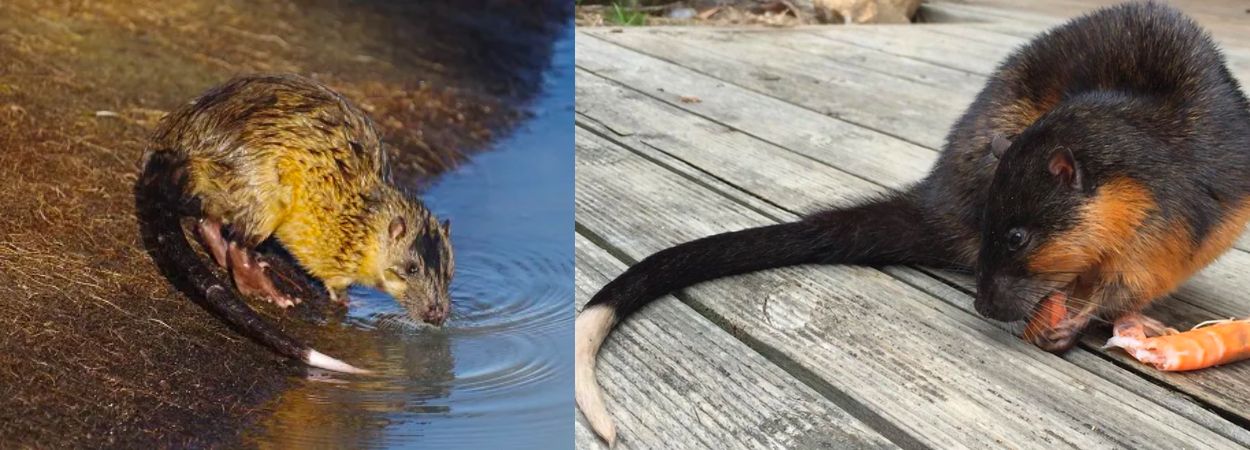
There is also the other tell-tale signs of the while tipped tail and the ears popping up above the water, which you will be able to see if you are close enough.

Another common mistake, believe it or not, is a duck! You’d think it would be fairly easy to differentiate between a duck and a platypus, but at that time of the day the light is hitting the water in weird ways and can easily deceive you. Like platypus, ducks keep their body stationary when swimming, paddling with their feet underwater, so they also leave that V shaped trail behind them. If you’re seeing them from a distance it can be easy to mistake the two so make sure you always take a second glance to confirm there isn’t a duck sitting on top of the water at the base of the V.

The duck is not the only bird you need to watch-out for, check out this recent video from a PlatypusWatch volunteer. The movement looked exactly like a platypus feeding in the riffle… until a Cormorant popped up!
Another very common misidentification is fish. You will commonly see fish jumping in the water. You often only see them out of the corner of your eye. Platypus however, rarely splash and make noise. Fish will also swim in circles and make ripples fairly similar to that of the platypus diving ripple. The fishes’ fins also pop out of the water with carp (a common invasive fish) fins appearing brown with a flash of pink, very similar to platypus feet and belly. Be vigilant when observing the water and attempt to take a video if you can. Again, if it is a platypus, you will see more of the body and should feel very confident in what you have seen. Check out the video below to see common fish ripples and fins.