Survey Site and Safety Information
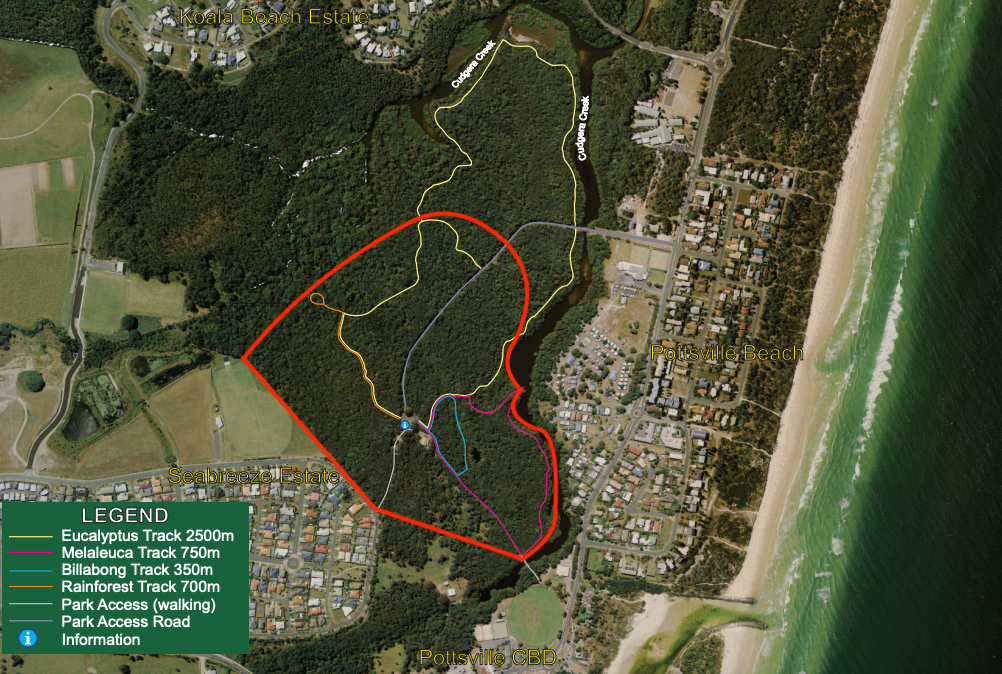
The survey site is located at Pottsville Environmental Park. Access is available off the end of Centennial Drive, gates close at 8pm but you can still exit the park after this time. This site has been selected due to its accessibility, significant cane toad populations, and the presence of native frog species.
All participants must complete this online induction prior to conducting cane toad control sessions. Once you have completed this course, please email [email protected]
When you are ready to start your control sessions and contribute to the ToadTrack program, please ensure you comply with the following recommendations:
- Wear suitable footwear for walking through vegetation and waterlogged areas.
- Check the weather forecast and do not walk in dangerous conditions, including severe heat or storms.
- During your walks, ensure you have suitable provisions for current conditions such as waterproof jacket, drinking water and insect repellant.
- Ensure you have a torch with sufficient battery-life to last your control session.
- Stay within designated study perimeters and do not walk close to the water’s edge or through forested areas.
- Let someone know where you are going and when you are due to return.
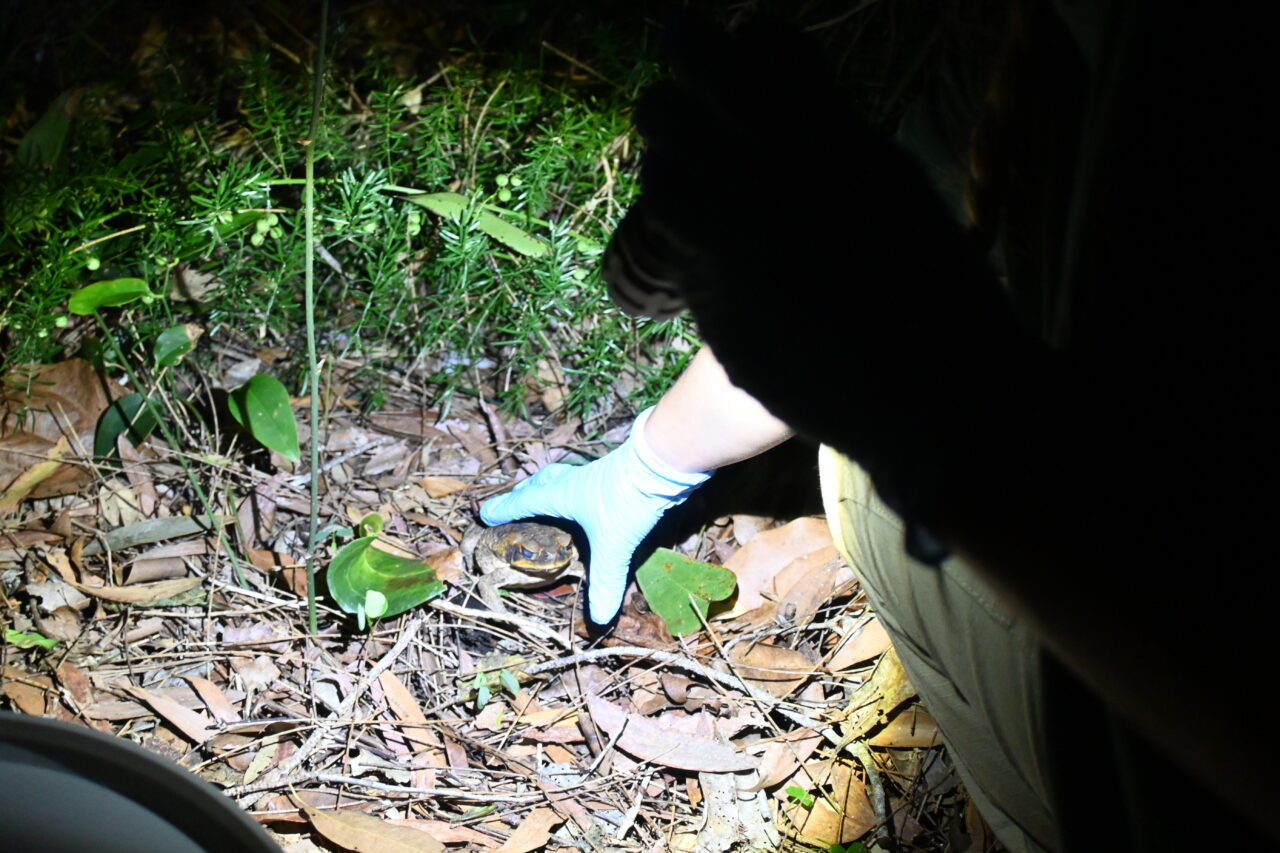
- Use gloves or a pick-up stick for the handling of all cane toads and rinse your skin immediately with freshwater in case of any contact with toxin.
- Take a mobile phone in case you have an emergency.
Common Risks On-Site
Be cautious while walking around the site and through bushland at night.
Stay alert for potentially dangerous wildlife such as spiders, ticks, and mosquitoes, which can carry diseases like Ross River virus. Snakes also inhabit these areas; remember that colour is not a reliable identifier, so treat any snake as potentially venomous and maintain a safe distance.
Slips, trips, and falls are a common hazard on-site due to vegetation, uneven paths, and obstructive objects. Always use a torch to watch where you are walking and stick to established paths or open areas. Be aware of sharp objects like broken glass or discarded needles on the ground, and wear enclosed shoes to protect your feet.
Site Map
See the below map indicating our study perimeter within Pottsville Environmental Park, as indicated by the red boundary line. During your control area please stay within this study area. Please note that this study area is quite large, while we aim to cover as much of this area as possible do not push yourself beyond your physical limits and ensure you have appropriate resources (eg. water and torch batteries, etc.).
While conducting your control session, utilise pathed paths to traverse the site and stick to open grassed areas while toad busting. Do not attempt to enter bushland or forested areas, and avoid the edges or entering waterbodies.
If you are unable to travel to this survey site, you are still able to contribute to our project by filling in our data form with your control sessions or submitting frog observations from elsewhere in Tweed. See further lessons for more information.